Description of teaching materials
Two dossiers
The first dossier provides a brief history of women's political engagement since the founding of the Republic of Bolivia in 1825; there is a description of a Bolivian organisation called "Centro de Educación y Desarrollo de la Mujer Ayni" (The Ayni Centre for Women's Education and Development), which is the institution responsible for overseeing the project in Bolivia; finally, the nature of the vulnerabilities and resources in the programme's specific area are explained culturally and ethnically, politically and economically; and a analysis is conducted of different aspects, such as the distribution of household work between men and women, children's attendance of compulsory schooling, and the problem of gender violence.
The second dossier explains the work carried out, providing information on the activities undertaken, the achievements made, the difficulties encountered, and the new challenges that lie ahead.
Activities sheet
This sheet contains five activities: the first three are related to the reality described in the rural communities in the Cinti region, while our aim with the other two is to draw attention to what is happening in our more immediate and familiar environment in terms of gender equality, and so link the global with the local.
Two videos
Following the same approach used in the two dossiers, video 1 shows the conditions of everyday life of the rural populations in the Cinti region in Bolivia, and video 2 describes the work done to improve these conditions, with the footage containing the testimonies of both local people and the Ayni Centre's technical and management team.
Photos and maps
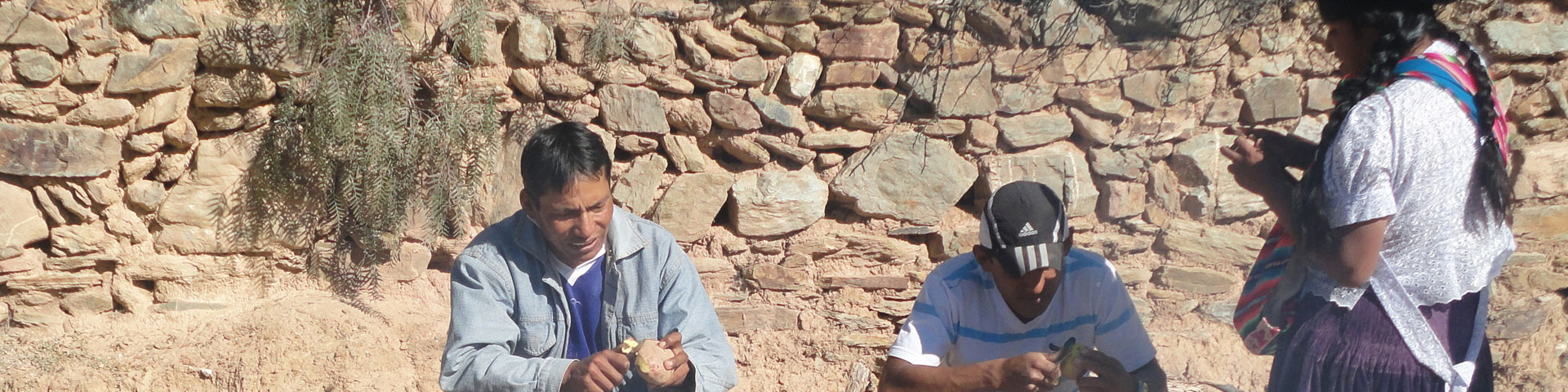
Maps of Bolivia are provided, along with a series of photographs that show the region of Cinti, its people, and sundry different moments in the programme's activities.
Use of materials
At Zabalketa, we suggest using the materials in the following different ways:
Begin by watching video 1 in class, then hand out dossier 1 and the activity sheet and form groups of 4-6 students.
Read the activity sheet out aloud, with aim being on the one hand to clear up any doubts the students might have, and on the other, to enable students to know beforehand what practical exercises they will have to do.
The next step, and still in groups, will be for each individual student to read dossier 1, which gives them a chance to highlight or make a note of those aspects they will find useful when performing the activities. After spending a few minutes answering any questions that may have come up, each group will start working on the activities.
Each teacher may decide whether to carry out all five activities or only some of them, as the number of hours and sessions will depend on this.
Once the activities have been completed, the groups will take it in turn to give their answers to the questions.
There is likely to be considerable overlap in the answers given by the different groups for activities 1 and 5. Therefore, and to liven up the dynamics, our recommendation is that only one group gives its answers in these two activities, while all the other groups simply add any new aspects that have not been mentioned.
The session ends by watching video 2 and distributing dossier 2, so the students can learn about the work done in the project and its achievements. Furthermore, it will be valuable to identify the similarities and differences between the programme's strategies and activities and the students' own ideas.
If any support or guidance is required for the application and use of this material, our data are to be found under the tab "Partner Institutions".