Since 2007, the Zabalketa Association has been pursuing an educational strategy called "Zabaldu Mundura", which in Basque means opening up to the world, and involves linking the work we do within the fields of International Cooperation and Education for Development.
Through this strategy, and besides improving the situation in developing countries, we ensure that our projects in Cooperation for Development also become tools of awareness and education in the developed world.
To do so, we have prepared an array of educational materials in Basque, Spanish and English, involving teaching units, videos, activity sheets, maps and photos.
The methodology for using these materials in the classroom is based on the "Case Method"(1), which involves forming small groups of 4-5 people to analyse a specific issue, need or real vulnerability, and then put forward possible ways of solving or improving them before the rest of the students, whereby they can be explained and discussed in class.
At Zabalketa, we are applying this learning methodology at Colleges of Further Education and the University of the Basque Country, recording highly satisfactory results, according to the assessments made by students and teachers alike.
In 2010, Zabalketa published its first teaching resource based on a project in cooperation for development called "Sustainable Development in Nor Yauyos-Peru".
The association went on to publish its second resource in 2013, under the title "A Case of Sustainable Development in Valles Cruceños in Bolivia".
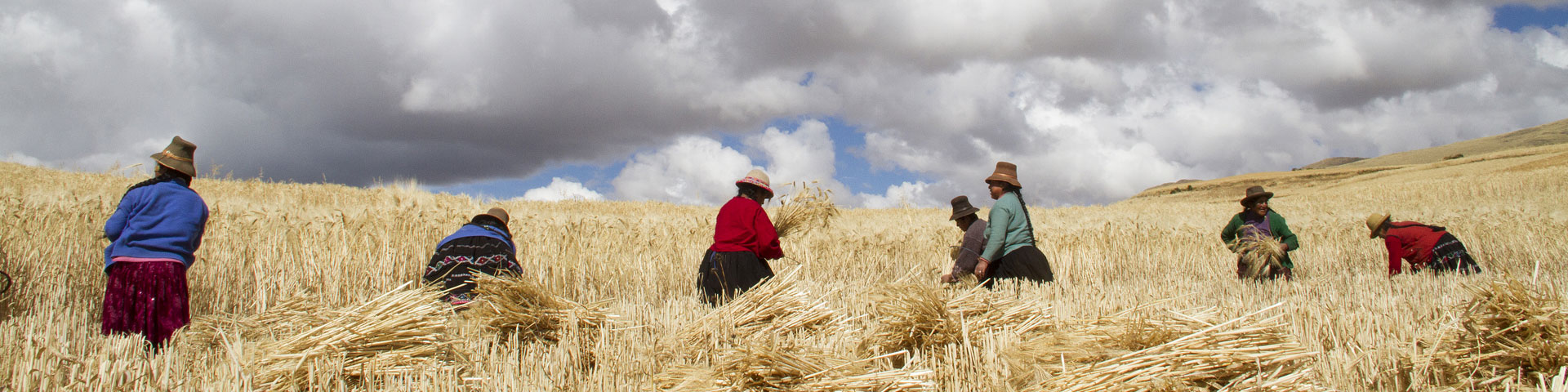
Now in 2015, we have issued our third proposal, called "A case of Institutional Reinforcement and Community Involvement-Peru". This third educational project is based on a programme of cooperation called "Fair and sustainable development in Andean communities-Peru", which, as in the other two aforementioned cases, has been jointly funded by the Basque Agency for Development Cooperation.
Given that the programme upon which this teaching resource is based has a socio-political component that prevails over economic or environmental considerations, this material is designed to be used preferably in those studies more directly linked to social issues.
It has been prepared by Zabalketa's management and technical teams and the Southern Network of Caritas of Peru, as well as by a team of three people who have reviewed and approved the inclusion of gender equality, environmental and human rights approaches.
We should like to extend our special gratitude to the people and institutions of the communities of Acopía, Santo Domingo, Tactabamba, Huayrachapi, Miskiuno, Ttasta Poyoncco, Asil and Pantipata, for their extensive and generous cooperation in the recording of the two videos, as this would not have been possible without their support.
This material, along with the other two projects mentioned earlier, is available on Zabalketa's website, and you will find our contact data under the Credits tab.
(1) The tab "User guide for materials" includes information on this method (only available in Spanish).