Materials
This educational project contains several documents and videos:
Two dossiers
The first dossier describes the living conditions within the farming communities, and both their strengths and their weaknesses in environmental, economic and socio-political terms. In turn, the second dossier outlines the operational strategies and the schemes that Zabalketa and the Southern Network of Caritas of Peru have implemented, as well as the results achieved.
Activities sheet
The sheet features three activities: the first two involve the reality described in the Andean farming communities in Peru, while the third is designed to draw our attention to what is happening in our more immediate and familiar surroundings, thereby linking the global to the local.
Videos
Following the same approach as in the two dossiers, video 1 shows the living conditions of the Andean rural communities in Peru, while video 2 explains the work undertaken to improve these conditions, with both of them including the testimonies of the local population and of the management and technical team of the Southern Network of Caritas of Peru.
Photos and maps
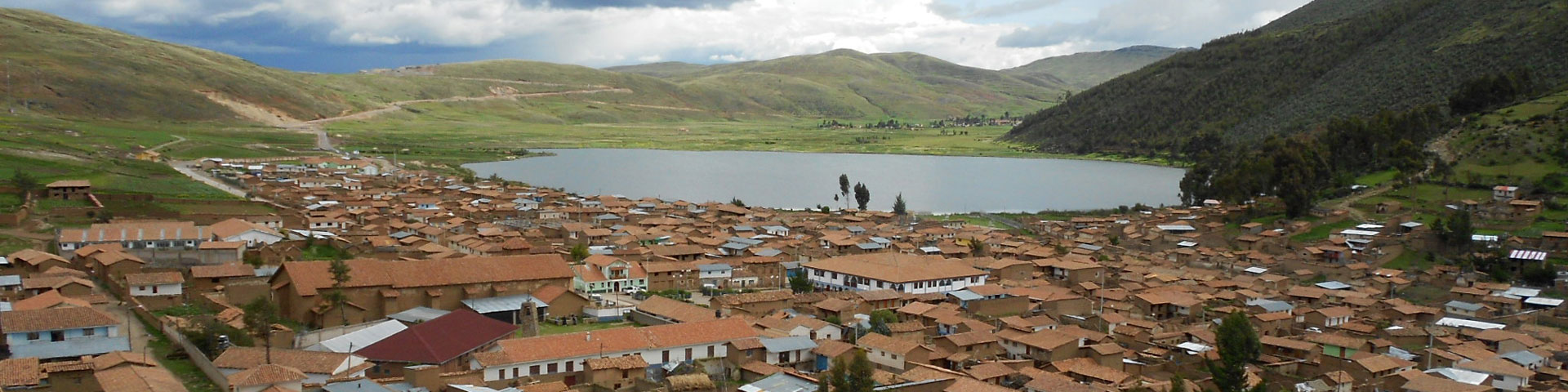
Sundry photos have been included to show the area where the farming communities live, as well as several moments in the performance of the activities.
Way of using the materials
At Zabalketa, we suggest using the materials as follows:
The first step will involve watching video 1 in the classroom, and then the groups of 4-5 people will be formed, with each student being given both dossier 1 and the activities sheet.
The next step will involve reading the activities sheet out aloud, with the aim being, on the one hand, to clarify any doubts there may be, and on the other, to ensure that the students have a prior understanding of the practical activities they will have to carry out.
Subsequently, and still in groups, the students will each read dossier 1, whereby each one may underline or make a note of any information that will be of use to them during the activities. After dedicating several minutes to clarifying any general doubts that have emerged on the case of the farming communities in Peru that are to be analysed, each group will start with the activities sheet.
Once the groups have completed the activities, they will all take it in turns to present their answers to each question; in other words, group 1 will present its answers to question 1, then group 2 will present its answers to question 1, and so on successively.
There will probably be numerous coincidences in the answers provided by the different groups, above all in activities 1 and 3. Therefore, and with a view to streamlining the activity, our advice is to let one group give its answers and then all the others can add to them with any new aspects that have not been mentioned.
The final step in the activity involves watching video 2 and giving the students dossier 2 so that they can find out about the work done and the achievements made thanks to the project organised by Zabalketa and the Southern Network of Caritas of Peru with the active engagement of the local population. In addition, it will be interesting to identify any similarities or differences there may between the strategies pursued through the project itself and those proposals made by the students in class.
In the event that any support or guidance is required for the application and use of this material, our contact details can be found under the tab "participating institutions".